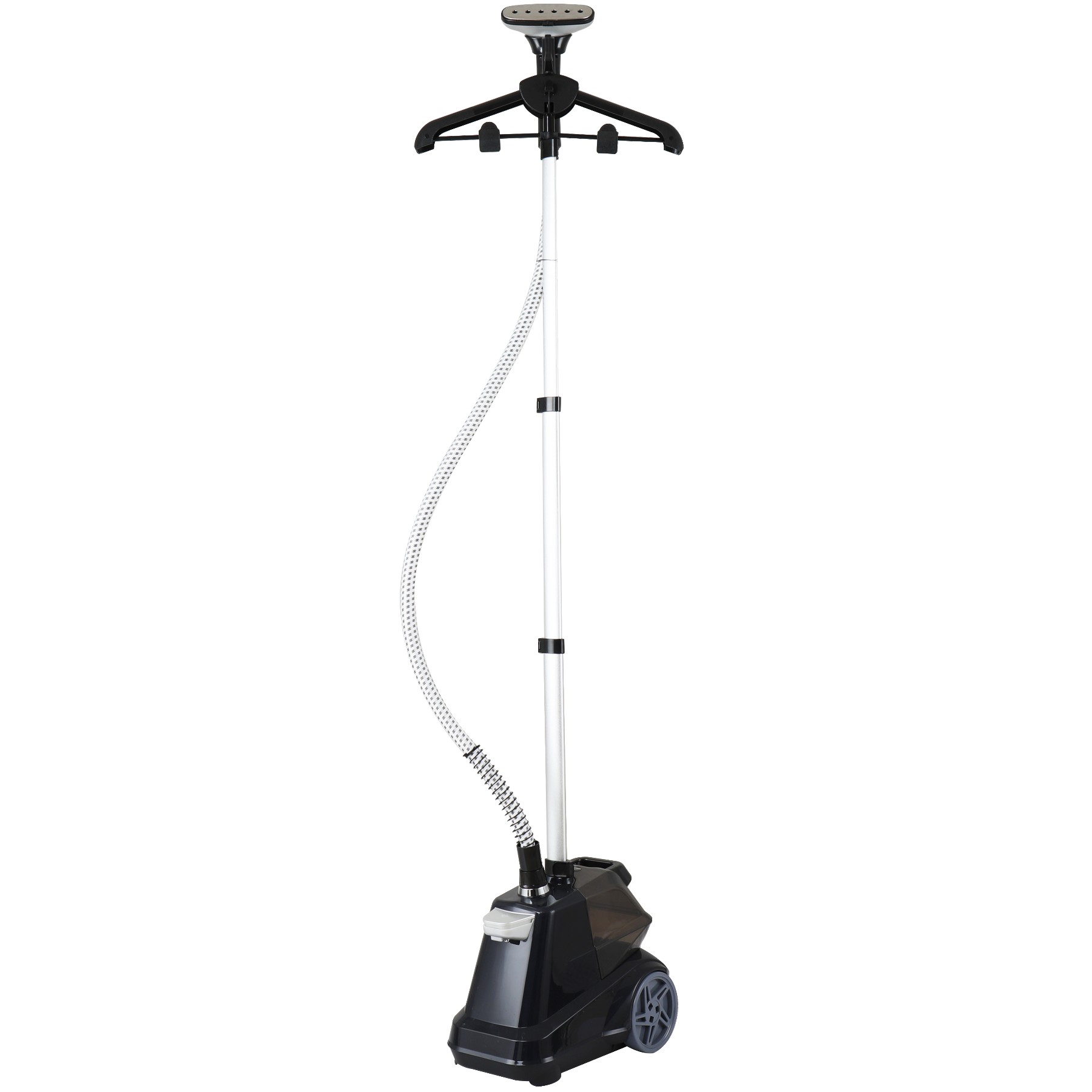
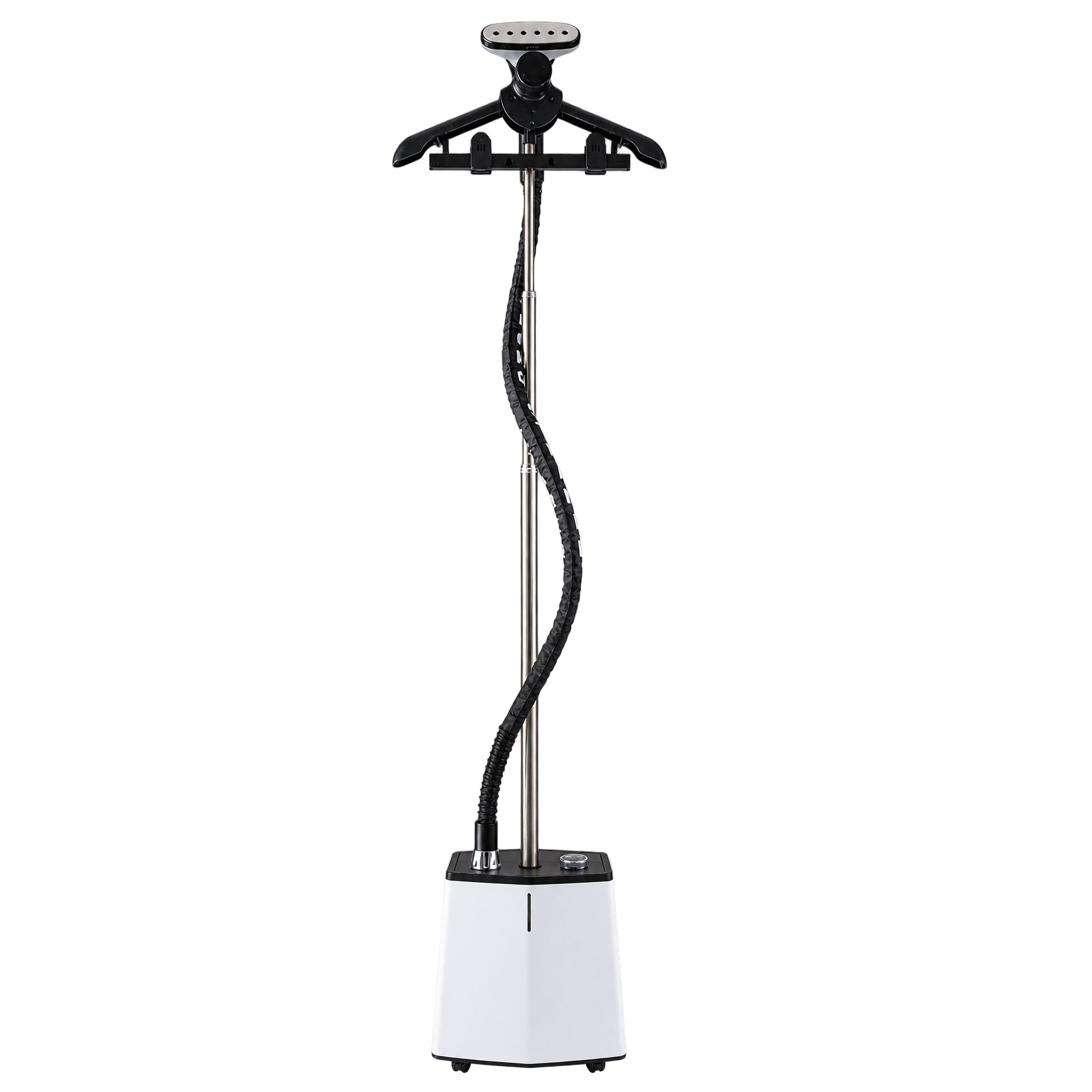
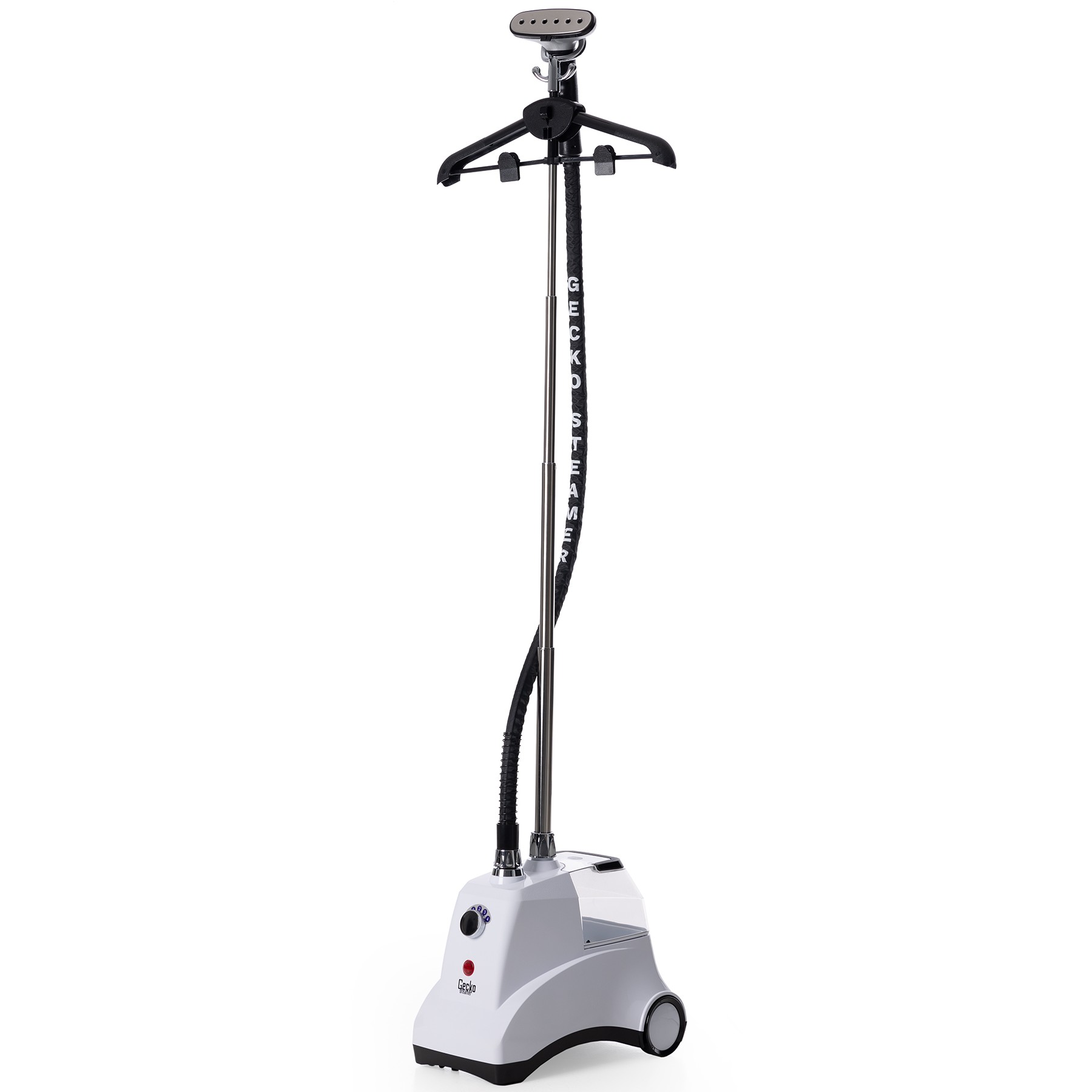
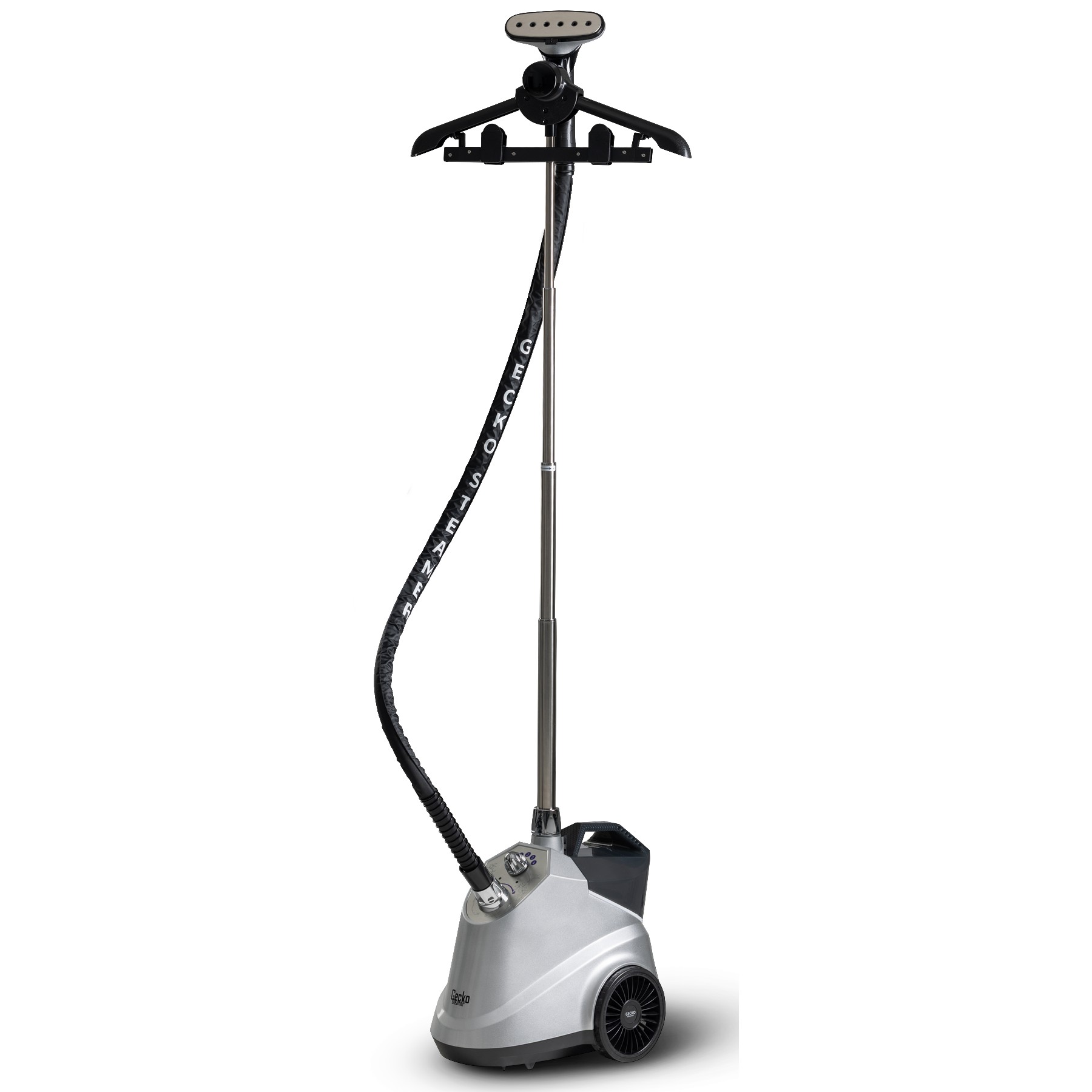
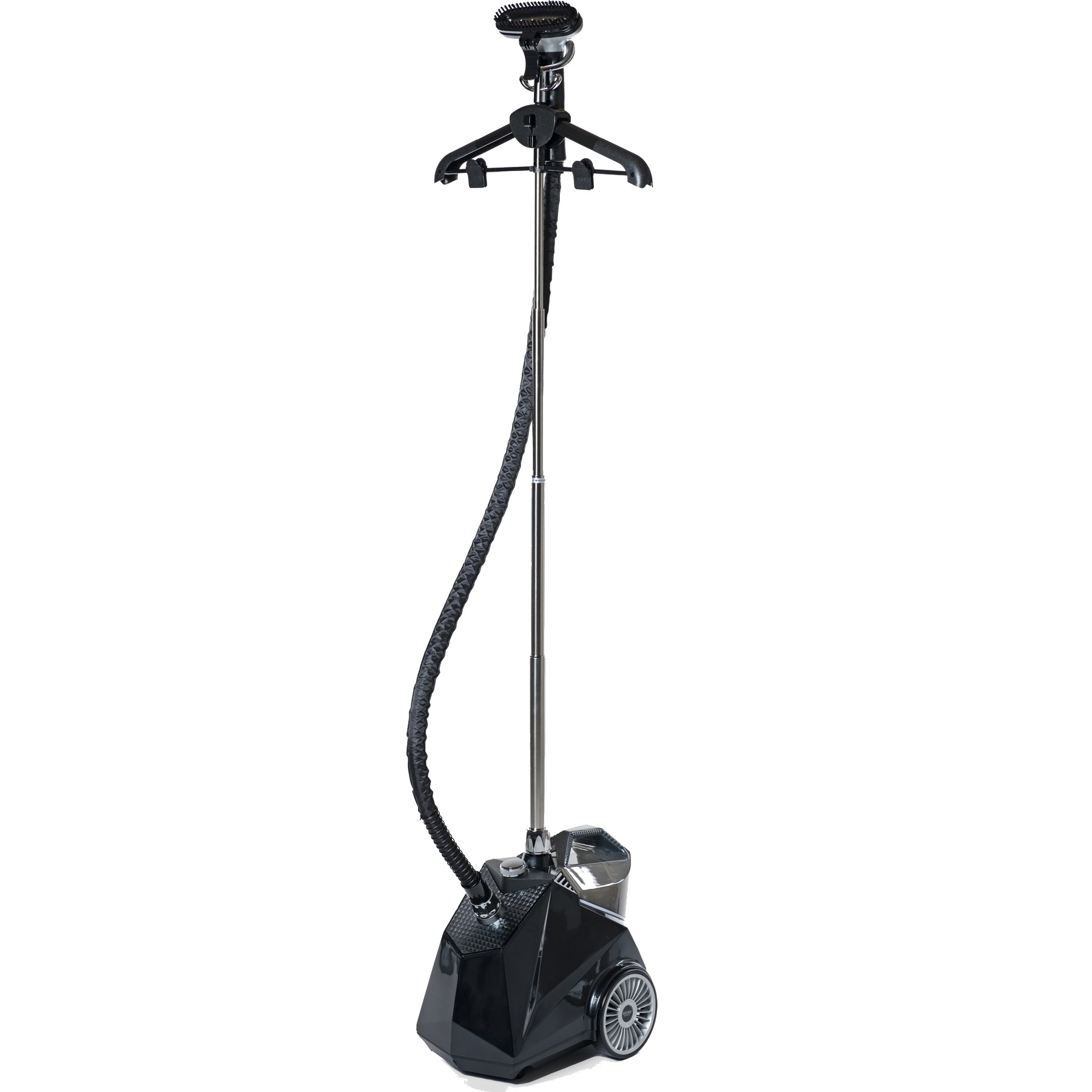
Diagnostics, maintenance and after-sales service for your Gecko-Steamer clothes steamer
Technical diagnostics, descaling protocols and workshop procedures before any maintenance return.
This technical guide, published by the Salamandres Developpement workshop (designer of Gecko-Steamer® appliances since 1994 under the direction of Laurent Depaepe), is intended to help you identify and resolve the most common operating faults independently.
In keeping with our commitment to durability and repairability, our appliances are built around modular mechanical designs. In more than 80% of cases, targeted maintenance (particularly descaling or boiler draining) restores original performance without requiring the appliance to be held in our workshop.
Important: before requesting a workshop return, carry out the causal checks and maintenance operations prescribed below.
Before you start: steam physics and mineral deposits
Good to know: a clothes steamer converts heat energy into a flow of steam from the water introduced into the appliance. Dissolved minerals (calcium and magnesium carbonates) precipitate under heat and are the main cause of mechanical deterioration:
- When limescale solidifies on the aluminium heating body, it creates an insulating barrier that reduces heat transfer and lowers the steam outlet temperature.
- Thermal safety components (fuses or bimetal thermostats) can trip in the presence of scale to prevent destructive overheating of the steam generator.
- Service safety: always allow the appliance to cool completely before handling it to avoid any risk of steam burns or boiling-water backflow.
Why hard water is critical in a high-pressure appliance
Unlike continuous-flow low-pressure appliances, a sealed pressurised boiler can suffer four direct chain failures when hard water is used:
- Reduced thermal efficiency: the mineral layer insulates the heating element, increasing heat-up time and reducing nominal pressure.
- Level probe fouling: limescale coats the probe responsible for detecting the water limit. The electronic board no longer registers the high-water level: the boiler fills beyond its capacity and floods the expansion chamber. Immediate result: the steam head spits and ejects boiling water.
- Air equalisation valve blockage (siphoning): as the appliance cools, residual steam condenses and creates a vacuum. If flakes of limescale block the air inlet valve that is intended to compensate for this vacuum, the appliance siphons water directly from the tank into the switched-off boiler. At the next start-up, the saturated boiler ejects liquid water.
- Scale flakes migrating towards the steam head: mineral fragments carried by the steam flow can block the micro-openings in the heated soleplate and may eject whitish mineral residue that can mark dark fabrics.
Manufacturer recommendation: use only demineralised water specifically formulated for irons and steam generator stations (additivated demineralised water that retains the electrical conductivity required by the level probe). Do not use tap water, even as a 50/50 mixture: any addition of mains water reintroduces minerals that immediately recreate limescale deposits and interfere with the boiler safety systems.
Maintenance & descaling: protocols by boiler architecture
Select your appliance model to follow the cleaning procedure prescribed by our technical department.
🟢 When and why should you descale?
As soon as mains water is used, evaporation concentrates minerals in the heating area. The maintenance interval depends on the hardness (TH) of your tap water and the number of hours of use per week. As soon as a light white film appears or the steam output drops, flushing is required.
Under continuous heat, calcium carbonate crystallises into compact calcite, which can obstruct internal tubing, block solenoid valves or cause warm-water spitting due to insufficient heat transfer.
🟢 Descaling procedure – Continuous low pressure (GK30 / HG38 / LM44 / LM58 / LS98)
- Fill the removable water tank with a solution of water and a descaling agent specifically intended for steam boilers. Effective alternative: white household vinegar (14°) diluted 50/50 with tap water.
- Refit the tank onto the appliance base so that the liquid flows down into the evaporation channel.
- Switch on the heating system for 30 seconds to start the chemical reaction, then switch the appliance off immediately.
- Leave the solution to work for 30 minutes at room temperature to dissolve fixed mineral deposits without attacking the seals.
- Rinsing: remove the accessories (steam head, telescopic pole) and tilt the appliance over a suitable drain point to empty all the liquid. Rinse with clean water and repeat the draining operation twice.
Returning to service: when first switching the appliance back on after descaling, direct steam onto an old cloth for one minute to expel any powdery limescale residue that could mark fabrics.
External cleaning: clean the steam head, stainless-steel plate and outer casing with a soft, slightly damp microfibre cloth. Do not use abrasive solvents.
Safety instructions: wear protective gloves and avoid directly inhaling vinegar descaling vapours during the initial reaction.
🟢 Descaling procedure – Sealed high-pressure boiler (G200 / G400 / G600 / G700)
- Check that the boiler is completely cold and depressurised. Add 0.5 litre of water mixed with a professional descaling agent for steam boilers (or 14° household vinegar mixed 50/50 with water).
- Tighten the safety cap securely.
- Switch the appliance on for 30 seconds to warm the mixture slightly, then switch it off and unplug it from the mains.
- Leave the solution to act inside the sealed boiler for 30 minutes.
- Draining: discharge the solution through the dedicated drain plug beneath the chassis (G200 / G400 / G600 models) or through the upper filling opening (G700) by tilting the unplugged appliance.
- Rinse thoroughly with clean water using two complete fill-and-drain cycles to remove all traces of acidity from the boiler.
External cleaning: wipe the iron's heated soleplate with a damp, non-abrasive cloth after each session to prevent textile dust build-up.
Restarting: release steam for a few seconds into a container before using the appliance on a garment.
Safety: never attempt to open the safety cap or drain screw while the boiler is still hot or pressurised.
🟢 Gecko-Steamer G800 maintenance
Refer to the detailed technical documentation for the G800 large-capacity high-pressure boiler:
🟢 Gecko-Steamer G900 and MP900 maintenance
For our hybrid stations equipped with a temperature-regulated iron and an independent pressurised boiler:
Common problems & diagnostic tree
Identify the symptom observed and apply the corresponding mechanical correction before considering a workshop return.
🟠 Water overflows around the tank area (GK30 / HG38 / LM44 / LM58 / LS98)
- Remove the water tank and inspect the lower valve: check that the sealing O-ring is correctly positioned in the screw cap.
- Check that no micro-cracks have appeared in the tank plastic following an impact or accidental drop. An air leak cancels the vacuum effect and causes the heating well to flood.
- Replace the original tank or its seal if a loss of watertightness is identified.
🟠 Steam wets garments and spits water (GK30 / HG38 / LM44 / LM58 / LS98)
Main physical cause
Scale build-up on the heating body: the thermal resistance created by limescale reduces the boiling temperature in the evaporation chamber. The insufficiently superheated steam immediately recondenses into droplets inside the hose.
Immediate corrective action
Carry out the complete 14° vinegar descaling procedure prescribed in the “Maintenance & descaling” section.
Other identified mechanical causes
- Cracked steam-head casing: a crack in the head allows cold ambient air to enter, causing sudden condensation of the steam before it exits. Solution: replace the steam head.
- Unfavourable thermal environment: avoid steaming directly under the airflow of an operating air-conditioning system.
- Residual condensate: hold the steam hose straight and vertical for a few seconds at start-up so that condensed droplets can flow back down towards the boiler.
Workshop note: if an appliance has never been maintained during several years of intensive use, the limescale layer may no longer be removable chemically; replacement of the heating block is then recommended.
🟠 Low, intermittent or no steam output (GK30 / HG38 / LM44 / LM58 / LS98)
- Carry out a complete descaling procedure to clear the inlet channel to the evaporation chamber.
- Check the routing of the steam hose: a kinked or pinched hose prevents the free discharge of low-pressure steam.
- If the appliance has been operated without water or subjected to prolonged overheating, the thermal fuse integrated into the circuit may have opened to protect the appliance. In this case, technical intervention is required (see the after-sales service section).
🟠 Steam spits or wets the laundry (G200 / G400 / G600 / G700 high-pressure series)
The 3 recurring causes:
- Too much water: the maximum volume tolerated by the boiler has been exceeded (there is no longer enough steam expansion space above the water).
- Cold iron soleplate or thermostat switched off: pressurised steam condenses on contact with an unheated steam outlet.
- Iron thermal fuse failure: often caused by leaving the iron switched on for a prolonged period on its rest without any steam flow.
Thermal diagnostic procedure
- Switch the appliance off and allow it to cool completely.
- Drain the boiler completely via the lower drain screw.
- Add a measured quantity of clean water (approximately ½ of the measuring cup supplied with the appliance).
- Switch on the main unit and set the iron's rotary thermostat to a medium-to-high position.
- Indirect touch check: after 2 minutes, check whether the iron's metal soleplate is heating up. If the soleplate remains cold, the iron's thermal protection has tripped and requires replacement.
- If the iron heats normally, press the steam trigger: the initial discharge of a few residual drops is normal before dry, dense steam is produced.
If normal operation returns, simply make sure never to exceed the maximum water quantity specified by our graduated measuring funnels.
View the iron thermal fuse replacement tutorial (G200 / G400 / G600 / G700)
🔴 Connecting the appliance trips the electrical circuit breaker
This indicates a protective earth fault caused by leakage current: a cracked sheathed boiler heating element, accidental water contact with the internal wiring, or a damaged power cable.
For absolute electrical safety, do not keep trying to use the appliance. It must be entrusted to our technical team for diagnosis on a dielectric test bench (follow the shipping procedure below).
Safety devices: principles and fault prevention
Our clothes steamers incorporate active and passive safety systems in accordance with European thermal-protection standards. A fuse or cut-out thermostat tripping is not a random failure, but a sign that an environmental or operating abnormality has been intercepted to protect the user and the building.
🔴 Thermal protection: causes and prevention
Thermal safety devices cut the electrical supply when the heating-body temperature exceeds the critical threshold (particularly during prolonged dry operation or excessive scale accumulation acting as a thermal barrier).
Before considering hardware repair, always carry out the flushing procedures and indicator-light checks. If a single-use thermal fuse has blown, it has fulfilled its protective function: replacement can be carried out at low cost in our workshop or by purchasing the original spare part.
Maintenance, workshop servicing & after-sales service
If the fault persists after completing these checks, our workshop can provide full technical service for your equipment.
Before shipping any equipment, please contact us via our online form so that we can open a technical case, record the symptom observed and confirm whether a return is necessary.
Please follow the logistics instructions below carefully to ensure your appliance is protected during transport:
🔴 Shipping procedure to our workshop (mandatory)
Carrier warning: the equipment is transported under the owner's responsibility. Inadequate packaging may cause mechanical impact damage that is not covered by the manufacturer's insurance.
Our workshop cannot accept warranty responsibility for equipment whose chassis or casing has been damaged as a result of insufficient packaging.
Shipping address
Salamandres Developpement – Gecko-Steamer After-Sales Service
32 Avenue Georges Phesans – Bât 1
64330 GARLIN – France
Mandatory parcel contents
- The faulty main unit, completely drained of all residual water, without unnecessary accessories (poles, hangers or brushes not involved in the fault, to avoid any risk of loss).
- A copy of the purchase invoice or your original order number.
- A note stating your contact details and describing the symptom observed.
Packaging recommendations
- Use the original polystyrene inserts and carton wherever possible, or a double-wall corrugated box with substantial protective cushioning (dense bubble wrap).
- For clothes steamers fitted with wheels, secure the appliance lying on its side to prevent unsupported loads during parcel handling and sorting.
Processing on receipt
- Test-bench inspection and metrological checks: if the fault is covered by the statutory and contractual warranty, the repair is carried out without delay and the appliance is returned at our expense.
- Fixed reimbursement of outbound shipping costs up to €15 incl. VAT (subject to eligibility under the manufacturer's warranty).
- Equipment outside warranty or damage attributable to severe scale build-up: a clear, itemised quotation is submitted to you before any work is carried out.
In summary
- 🟢 Maintenance & descaling: the first mechanical cause of pressure loss.
- 🟠 Methodical checking: isolate the symptom using our protocol before dismantling the appliance.
- 🔴 Manufacturer workshop: direct support from the technicians who design the equipment if the problem persists.
Download user manuals
Find the user manual corresponding to your Gecko-Steamer® model in PDF format.
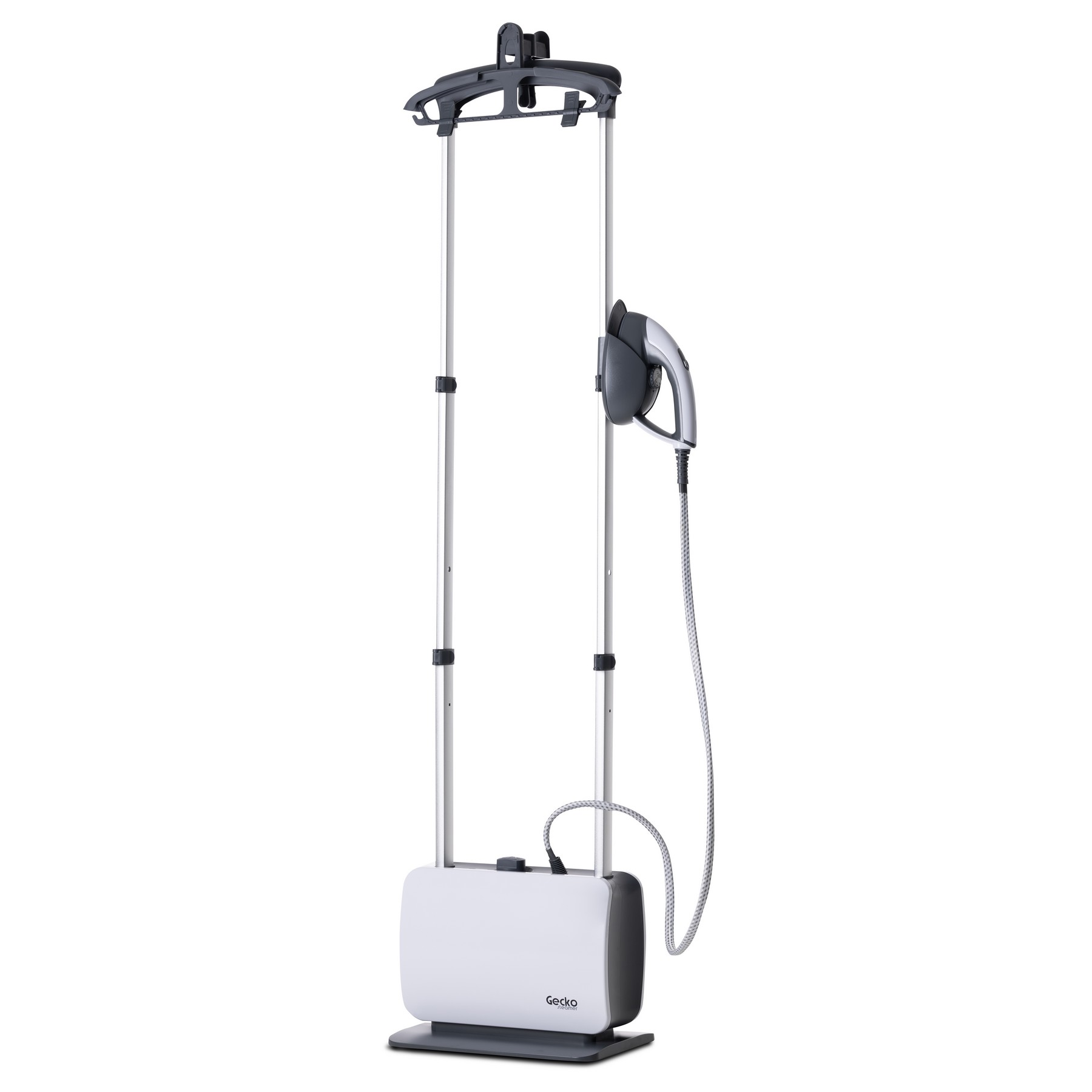
Multi-position board assembly
Assembly instructions for the board fitted to Gecko-Steamer® G400EL, G600EL and MP500 models.